



On Tuesday, April 23, 2024, at 0925 hours, the following 40-year-old male off-duty New York City employee was arrested and charged within the confines of the 44th Precinct in the Bronx.
Arrested:
Julio Alcantara-Santiago
NYPD Police Officer
Charges:
- forcible touching;
- sexual misconduct;
- sexual abuse in the 1st degree;
- sexual abuse in the 3rd degree;
- criminal sexual act in the 1st degree.
The investigation remains ongoing.
All charges are merely accusations and all defendants are presumed innocent until and unless proven guilty.
Anyone with information related to this incident is asked to call the NYPD‘s Crime Stoppers hotline at 1–800–577–TIPS (8477) or for Spanish, 1–888–57–PISTA (74782). The public can also submit their tips by logging onto the Crime Stoppers‘ website or by texting their tips to 274637 (CRIMES) then enter TIP577.
All tips will be kept strictly confidential.
.
MORE ARTICLES
NYPD Police Officer, Christian Garcia, 32, Arrested
On Tuesday, April 23, 2024, at 0925 hours, the followingCan I Sue My Neighbor For Abusing Their Child?
In the United States, roughly 600,000 children become victims ofWhy More US Citizens Are Betting On Sports
In 2023, the sports betting industry increased in value byA Brief History Of Michigan’s Gambling Laws
Gambling laws across the USA can be seen as aCalling All Artists: NYCHA Artist-In-Residence Program
The Public Housing Community Fund (Fund), an organization committed toNew York City’s Accomplishments
Halfway through our first term, it is time to lookKeven Ramirez, 27, Murdered
On Sunday, April 21, 2024, at approximately 0053 hours, policeIMMIGRATION
NEWS
New York City Immigrant Heritage Celebration 2024

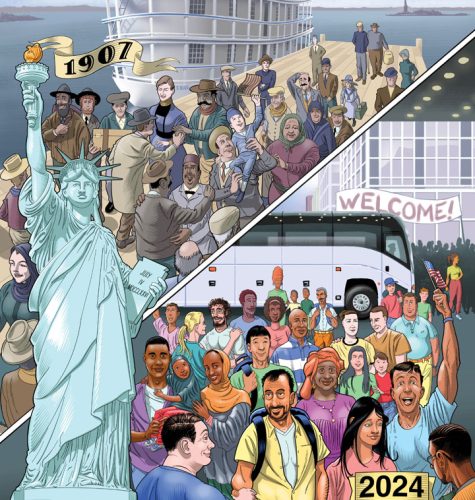
The Mayor’s Office of Immigrant Affairs kicks off the 20th annual Immigrant Heritage Week with a campaign Celebrating the City of Immigrants, honoring long time immigrant New Yorkers and recently arrived immigrants. This year, we celebrate the resilience and determination…
New York City Announces Agreement With The Legal Aid Society In “Right To Shelter” Mediation

New York City Mayor Eric Adams today announced that the City of New York has come to an agreement with The Legal Aid Society, providing the city additional flexibility under the 1981 consent decree in Callahan v. Carey, related to…
New York Taxpayers: Who Is The Priority, American Citizens, Or Illegal Immigrants?

The historic Roosevelt Hotel, nestled within walking distance of renowned tourist attractions like Times Square and the Empire State Building, as well as vibrant activities such as Broadway shows and upscale restaurants, once symbolized luxury and cultural significance in the…
POLITICS
NEWS
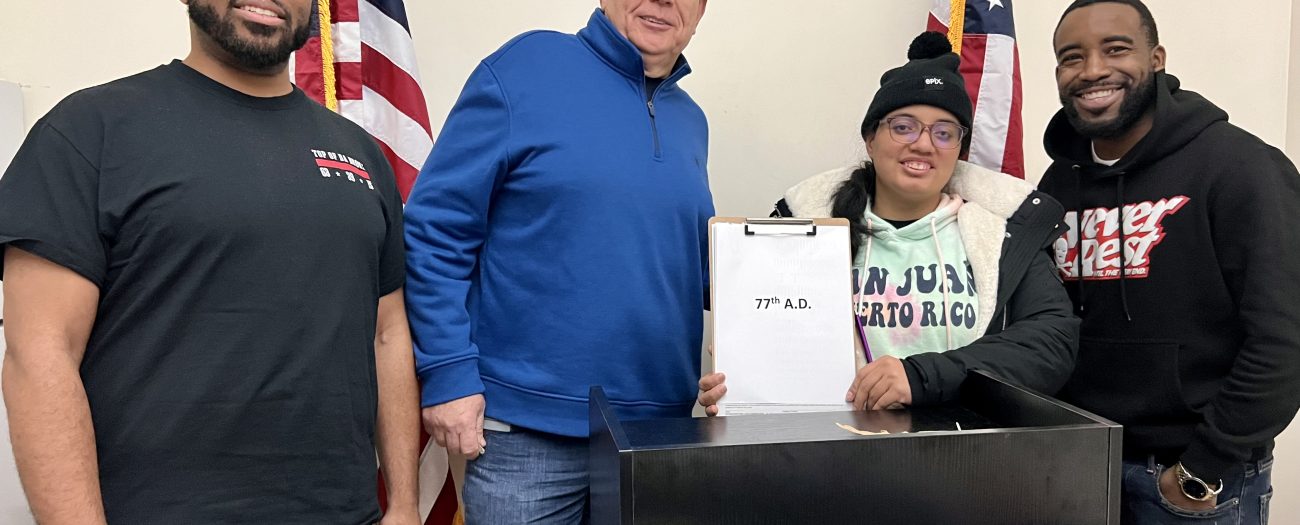
Election 2024: Bronx Conservative Party Challenges Bronx Democratic Leadership


HEALTH
NEWS
Community & Conservation: Crotona Park East Celebrates Earth Day & Autism Awareness
By Gonzalo DuranThe Legal Pulse Of New York: How Taxi Accident Cases Compare To Rideshare Ones
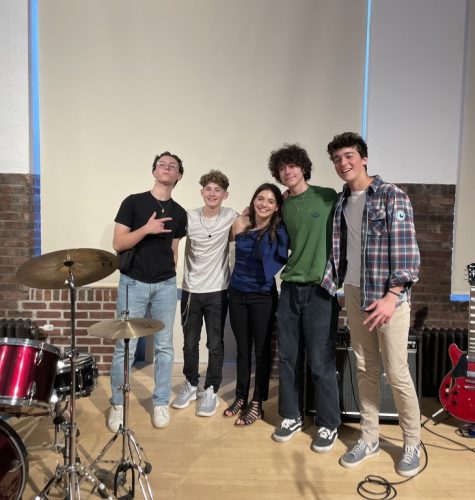
By Jonas BronckConcert Fundraiser To Help NYC Artists Facing Mental Health Challenges
By Jonas BronckREAL ESTATE
NEWS
Calling All Artists: NYCHA Artist-In-Residence Program
By Jonas BronckScoring A Goal For Affordable Housing
By Jonas BronckDespite Sharpest Case Increase, The Bronx Remains Least Active Foreclosure Market In NYC
By Jonas BronckNew York City To Create Tens Of Thousands Of Affordable Homes
By Jonas Bronck“Yes” To Housing In God’s Backyard
By Jonas BronckLaunch Of New York City’s Tenant Protection Cabinet
By Jonas Bronck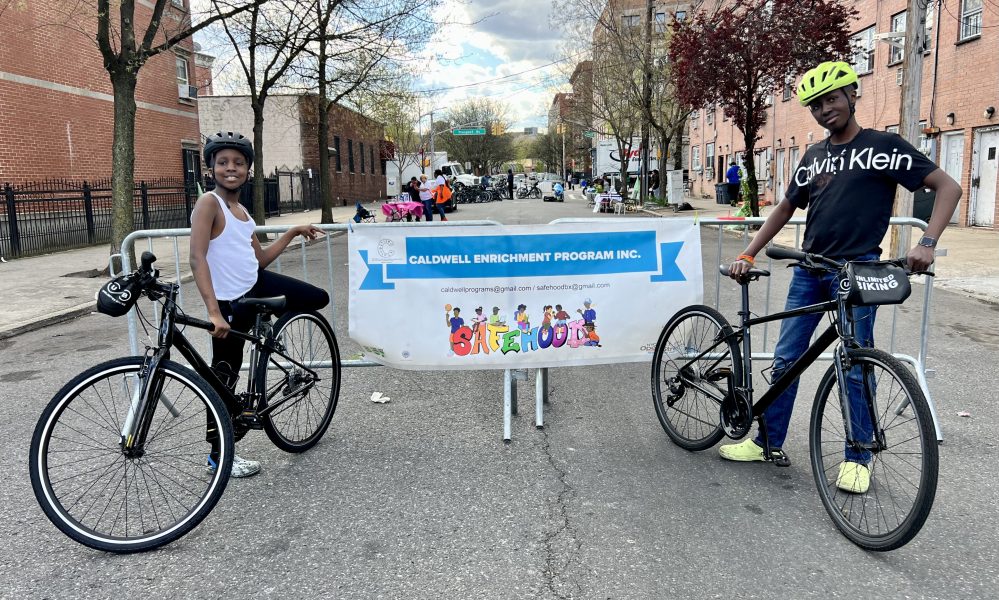
In Crotona Park East, a Bronx neighborhood known for its limited green spaces, local organizations are spearheading efforts to enhance the area’s beauty and community spirit. Prominent among these are Friends of Crotona Park, Devil Dog USA Incorporated, and the Caldwell Enrichment Program Incorporated, each playing a crucial role in fostering community engagement and environmental stewardship.
This year, Caldwell Enrichment Program Incorporated led the organization of an Earth Day event that also emphasized Autism Awareness, reflecting their commitment to inclusive community initiatives. The event began with Ms. Y. Lonnie Hardy, commonly referred to as Ms. Lonnie, the Chief Executive Officer of Caldwell Enrichment Program Incorporated. She oversaw the planting of new plants and flowers in flower beds located adjacent to a local school, directly across from their headquarters. The…



ENVIRONMENT
NEWS
Community & Conservation: Crotona Park East Celebrates Earth Day & Autism Awareness
By Gonzalo DuranIn The Bronx, Teens Reflect On Today’s Total Solar Eclipse Experience
By Gonzalo DuranNew Yorkers Anticipate Today’s Total Solar Eclipse
By Gonzalo DuranCRIME
& PUNISHMENT
Lynija Eason Kumar, 27, Arrested For The Murder Of Jalayah Eason, 6
By Jonas BronckBlockchain Technology: Transforming The Gambling Industry In New York
By Jonas BronckStrategies For Embracing Vulnerability For Dating In New York Without Compromising Personal Strength
By Jonas BronckMichael Mendez, 34, Murdered
By Jonas BronckNYPD Police Officer, Julio Alcantara-Santiago, 40, Arrested
By Jonas BronckNYPD Police Officer, Christian Garcia, 32, Arrested
By Jonas BronckINFRASTRUCTURE
NEWS



NOTABLE
PERSONS
Street Renaming Petition To Honor Mario D’Agostino

Mario D’Agostino, who passed away June 14, 2020, was a true leader in his community in the Bronx and left his mark on the neighborhood and everyone, who had the pleasure of knowing him.
Mario was an honorable man, who changed people’s lives with his beautiful mind, strong work ethic, positive outlook on life and investing in his favorite part of New York City, the Bronx.
Brenda Jimenez Wins Four Silver & Bronze Stevie ® Awards For Women In Business In 2020

Brenda Jimenez, a Bronx native, has been named the winner of four Stevie ® Awards in the 17th annual Stevie Awards for Women in Business including two silver awards and two bronze awards.
The Stevie Awards for Women in Business honor women executives, entrepreneurs, employees, and the companies they run– worldwide. The Stevie Awards have been hailed as the world’s premier business awards.
More than 1,500 entries were submitted this year…
Editorial

You should know that in one of his first public appearances, after having resigned as Governor for New York State, Andrew Cuomo will be visiting the South Bronx. His visit to the Bronx is to meet with Members of “The New York Hispanic Clergy Organization”, which I preside over.
As you know, last summer Governor Cuomo resigned, when he was accused and practically abandoned by all his friends, politicians, and community groups, whom he had helped in the past. These so-called friends, and groups that were all too happy to kiss his ring, joined the “cancel culture” environment, that plaques us all, without due process, they washed their hands with a dismissive attitude, sending the message “Crucify him, crucify him”.
Several courts and judges have dismissed the allegations of “sexual harassment” against Governor Cuomo. With this episode behind him, Governor Cuomo has begun to visit and make public appearances by visiting different faith-based organizations and community groups.
It is very important for you to know that Governor Cuomo’s first public visit was to “God’s Battalion of Prayer Temple” in East Flatbush, Brooklyn on Sunday March 06, 2022. His next planned visit is to the “New York Hispanic Clergy Organization” in the South Bronx.
You should also know that in a recent poll, Governor Cuomo, without being a candidate nor having announced his political aspirations, has polled with just four (4) points behind Governor Kathy Hochul.
As you know, Governor Hochul was a friend and she was handpicked by Cuomo to be his Lieutenant Governor. However, she was among one of the first to throw him under the bus, in the midst of the allegations, launched against him.
I imagine that those four (4) points will evaporate very soon and Governor Hochul will have to consider asking Governor Cuomo for his support, if she wishes to be officially elected by the people to the governorship.
As President of the “New York Hispanic Clergy Organization”, I am looking forward to hosting Governor Cuomo on Thursday, March 17, 2022. We welcome him to the South…
ART
NEWS



EDUCATION
NEWS
The Patriot Scholarship 2024

The Bronx Veteran Coalition is excited to announce our collaboration with the Mt. Nebo Grand Lodge Community Foundation to offer the 2024 Patriot Scholarship….
Students At Bronx Girls’ Public School Visit West Point To Explore Academic, Career Opportunities

On Thursday, April 4, 2024, Amplify Her® Foundation, a private grantmaking foundation, hosted a unique college exploration day at the…
Artworks By Bronx Students On Display At $14.8 Million Del Valle Square Project

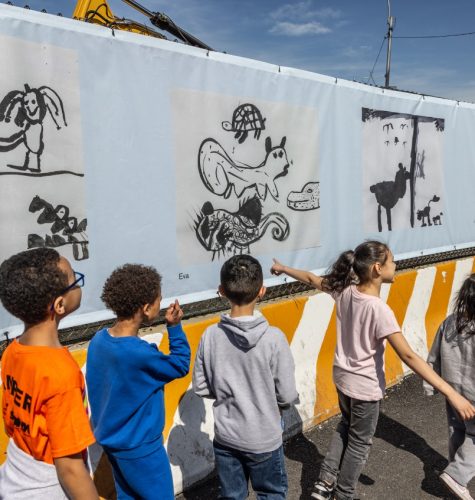
NYC Parks, the NYC Department of Transportation (DOT) and the NYC Department of Design and Construction (DDC) on Tuesday unveiled student art along a…
ENTERTAINMENT
REEL
Concert Fundraiser To Help NYC Artists Facing Mental Health Challenges
The Book Of Harth Documentary To Have Its Bronx Premiere On City Island

White Rose: The Musical

World Of $5 Deposit Casinos: Affordable Gaming For All

One Of Three New Casinos Proposals Could Include The Bronx

Understanding the NCAA Tournament’s Opening Act: The First Four

New York City FC Gear Up For A Run At The Title In 2024
360 ALLSTARS Now Playing At The New Victory Theater
ENTERTAINMENT
NEWS



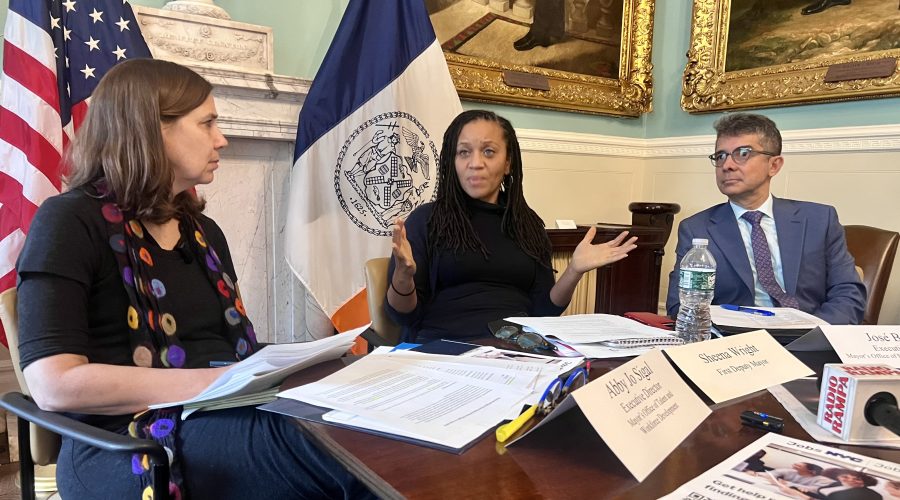
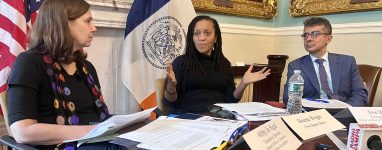
On the morning of April 12, 2024, at City Hall, we spoke with Sheena Wright, First Deputy Mayor; Jose Bayona, Executive Director of the Mayor’s Office of Ethnic and Community Media; and Abby Jo Sigal, Executive Director of the Mayor’s Office of Talent and Workforce Development, regarding the Mayor’s Office Hiring Hall initiative.
Last year, the New York City (NYC) Mayor’s office and other agencies launched the Hiring Halls initiative, aimed at boosting employment opportunities in areas with high unemployment rates. These events are designed as comprehensive employment gatherings, providing job seekers with the chance to connect with municipal agencies, interview with employers, and even secure same-day job offers—all within their own neighborhoods.
Following the success and lessons learned from last year’s pilot program, NYC is now revamping its strategy and plans to hold Hiring Halls every month across the boroughs over the next few months. These events will serve as vital hubs for job seekers to engage with a variety of employers and training providers, including organizations like the City University of New York (CUNY) and their English language programs.
With NYC experiencing the highest private sector employment in its history, boasting a job market of 4.7 million, the initiative aims to refocus efforts on high-unemployment areas such as Harlem, Brownsville, Southeast Queens, the South Bronx, and others in a broader effort to stimulate local economies and combat joblessness.
Recognizing that effective support cannot solely originate from City Hall, the initiative will implement on-the-ground efforts, leveraging local assets and overcoming access barriers…
MORE ARTICLES IN THIS CATEGORY
BUSINESS
NEWS
Connecting More New Yorkers To Good-Paying Jobs

Since day one, this administration has had a clear mission: protect public safety, rebuild our economy, and…
More New Yorkers To Be Connected To Jobs & Training

New York City Mayor Eric Adams today announced “Jobs NYC,” a new multi-pronged citywide effort to…
2023 Wall Street $34 Billion Bonus Pool Relatively Flat Over 2022

The average annual Wall Street bonus dipped to $176,500 last year, a 2% decline from the previous…
Bronx Economic Development Corporation Launches Bronx Leadership Support Initiative

The Bronx Economic Development Corporation (BXEDC) has launched a new program to provide technical assistance and capacity…
2,400 Chronically-Delinquent Customers Owe NYC A Total Of $102 Million In Unpaid Water Bills

New York City Mayor Eric Adams and New York City Department of Environmental Protection (DEP) Commissioner Rohit…
SPORT NEWS

The sports betting market has grown significantly in recent years. Read on to find out why more and more US citizens are betting on sports.
By Jonas Bronck / PublisherIn 2023, the sports betting industry increased in value by a staggering 44.5% from the previous year, with over $11 billion in revenue. This growth represents more generated revenue than every other source of income in the gaming industry, including iGaming, table games, and slots. Several factors have contributed to this sudden growth, including legalization, technology, and a cultural shift. Below, we will discuss why more US citizens are betting on sports and what the future looks like.
State-Level Legalization
Betting on sports was taboo, and it was illegal in most states in the United States. However, a shift in the legal landscape has enabled people to enjoy betting on all types of games, including sports. The Professional and Amateur Sports Protection Act, which occurred in 1992, meant that betting on sports was prohibited mainly in the United States. It was not until 2018 that the federal ban was removed, essentially making betting on in-person and online sports legal.
In 2020, 19 states made it legal to participate in online sports betting; by 2023, 33 states had joined in reversing the ban.
Some states, such as Tennessee and Kentucky, have partially lifted the ban. You can bet online in these states but cannot place sports bets in person, leading to a significant rise in digital betting in these states. It is likely that as time goes on, we will continue to see more states in the US lifting…
MORE ARTICLES
The New York Rangers’ 2024 Playoff Potential: A Comprehensive Analysis

Yankee Stadium Buzzes With Excitement On Opening Day 2024

Final Four 2024 Clash: Who Will Survive?

LOCAL
OBITUARIES